
Exposed beams are a signature feature on many Arizona homes. You see them on Southwestern-style homes, Santa Fe-inspired properties, territorial homes, patios, parapets, porches, and exterior elevations throughout the Phoenix area. These wood details add warmth and architectural character, but they are also constantly exposed to harsh desert conditions.
Over time, exposed beam ends can crack, split, dry out, rot, and lose sections of wood. Homeowners may notice deteriorated viga ends, weathered rafter tails, damaged patio beams, or beam extensions that appear to be breaking apart. In many cases, the damage begins at the exposed end of the beam and gradually gets worse as sun, heat, and moisture work into the wood.
Sticks’n Steel Construction provides beam end repair and exposed beam restoration for homeowners throughout the Phoenix area. Understanding why these beams deteriorate can help homeowners decide whether the beams can be repaired, restored, protected, or need to be replaced.
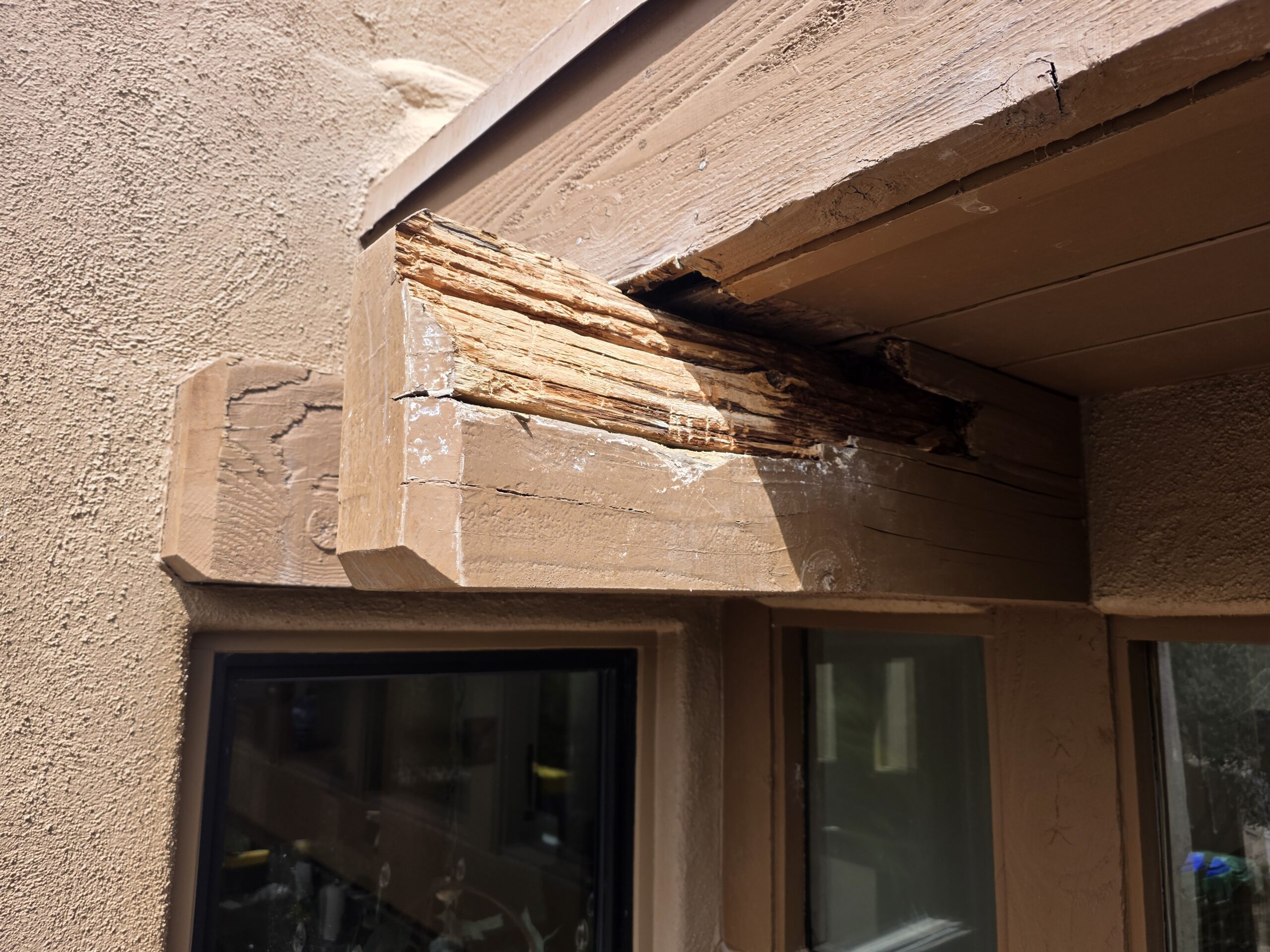
Exposed beam ends can crack, split, and deteriorate over time from Arizona sun, heat, and seasonal moisture.
Table of Contents
- Why Arizona’s Climate Is Hard on Exposed Beams
- How UV Exposure Damages Exterior Wood
- How Dry Heat Causes Cracking and Splitting
- Why Monsoon Moisture Makes Beam Damage Worse
- Why Beam Ends Are Most Vulnerable
- Viga and Decorative Beam Rot
- Signs Your Exposed Beams Are Starting to Rot
- Can Rotted Exposed Beams Be Repaired?
- How Protective Beam Caps Help
- Frequently Asked Questions
Why Arizona’s Climate Is Hard on Exposed Beams
Arizona weather creates a difficult environment for exterior wood. Intense sunlight, dry heat, seasonal monsoon moisture, dust, wind, and temperature swings can slowly break down exposed beam ends. Even when beams are painted, stained, or sealed, those protective coatings eventually age, crack, peel, or lose effectiveness.
Once the finish starts to fail, the wood underneath becomes more vulnerable. Small cracks can open up, moisture can enter, and the surface of the beam can begin to deteriorate. This is especially common on exposed beam ends that extend beyond roof lines, parapets, patio covers, or exterior walls.
In many Arizona homes, these beams are both decorative and architectural. That makes preservation important. When damage is caught early enough, beam end restoration may help repair the exposed portion without replacing the entire beam.
How UV Exposure Damages Exterior Wood
One of the biggest causes of exposed beam deterioration in Arizona is UV exposure. The sun is intense for much of the year, and exterior wood that receives direct sunlight can dry out, fade, and weaken over time.
UV exposure can break down the outer layer of wood. As this happens, the surface may become rough, brittle, or uneven. Paint and stain may begin to fade, crack, or peel. Once the finish is compromised, the beam end becomes more exposed to weather damage.
Common signs of UV-related beam damage include:
- Faded or chalky paint
- Dry, rough wood texture
- Surface cracking
- Splitting at the beam end
- Flaking or peeling finish
- Exposed raw wood
UV damage does not always mean the beam needs to be replaced. If the deterioration is limited to the surface or exposed end, repair and refinishing may be possible.
How Dry Heat Causes Cracking and Splitting
Arizona’s dry heat can pull moisture out of wood. As wood dries, it can shrink, crack, and split. This process is especially noticeable on beam ends because the end grain is often more exposed and vulnerable than the sides of the beam.
Cracking may start small, but over time those cracks can widen. Once cracks open up, they create pathways for dust, moisture, insects, and additional weather exposure. During dry months, the cracks may expand. During wetter periods, moisture can enter and cause additional swelling or deterioration.
This repeated cycle can weaken older finishes and make the beam look increasingly worn. Homeowners often notice that the beam ends look worse than the rest of the beam because the ends absorb more exposure.
Why Monsoon Moisture Makes Beam Damage Worse
Even though Arizona is known for dry heat, monsoon season can create serious problems for exposed beams. When rainwater enters cracks, gaps, or failed finishes, the wood can absorb moisture. If that moisture remains trapped, deterioration can accelerate.
Monsoon moisture is especially damaging when combined with existing cracks or open end grain. A beam that has already dried out and split from sun exposure can absorb water more easily during storms. Then, as the weather dries again, the wood expands and contracts. Over time, this cycle can worsen cracking, splitting, and rot.
Moisture-related beam damage may show up as:
- Dark staining around cracks
- Soft or crumbly wood
- Peeling paint near the beam end
- Swollen or uneven wood surfaces
- Rot at the exposed end
- Sections of wood breaking away
Once water has a path into the beam, the damage can continue below the surface. That is why early repair is important.
Why Beam Ends Are Most Vulnerable
Beam ends are often the first area to deteriorate because they are exposed from multiple angles. The end of the beam may face direct sun, wind, rain, and open air. If the beam extends beyond a roof line or parapet, the end may have little protection from the elements.
The end grain of wood can also absorb moisture more readily than the face of the beam. When the finish fails, the beam end becomes a weak point. This is why homeowners may see damage at the end of the beam even when the rest of the beam still appears solid.
Common vulnerable areas include:
- Exposed viga ends
- Rafter tails
- Patio beam ends
- Parapet beam extensions
- Decorative beam blocks
- Exterior wood accents
If the damage is limited to the exposed end, professional beam repair may be a practical solution.
Viga and Decorative Beam Rot
Vigas are common on Southwestern and Santa Fe-style homes throughout Arizona. These exposed wood beams are often used for architectural character, but the ends are frequently exposed to direct sun and weather.
Over time, viga ends can crack, split, and deteriorate. Some may lose their original shape. Others may show dry rot, missing sections, or failed patchwork from previous repairs. Because vigas are highly visible, damage can affect curb appeal and make the home look neglected.
Viga repair often focuses on preserving the architectural look of the home. When the main beam is still sound, the exposed end can sometimes be repaired, rebuilt, reshaped, and finished to better match the original profile.
Signs Your Exposed Beams Are Starting to Rot
Homeowners should inspect exposed beams periodically, especially before and after monsoon season. Early signs of deterioration may be subtle, but they can become worse if ignored.
Watch for these signs:
- Cracks at the beam ends
- Splitting along the grain
- Soft, brittle, or crumbly wood
- Missing chunks of wood
- Peeling paint or failing stain
- Dark staining after rain
- Open gaps in old patchwork
- Uneven or distorted beam shapes
- Dry rot or surface decay
- Exposed raw wood at the end of the beam
If you notice these issues, it is better to have the beam evaluated sooner rather than later. Small repairs are often easier to manage before deterioration spreads deeper into the wood.
Can Rotted Exposed Beams Be Repaired?
Many rotted exposed beam ends can be repaired if the damage is limited and the remaining wood is stable. The repair process depends on the condition of the beam, how far the deterioration extends, and whether the beam is decorative, structural, or both.
Beam end repair may include removing damaged material, stabilizing the remaining wood, rebuilding missing sections with a professional restoration system, shaping the repair, sanding, finishing, and adding protective caps when appropriate.
However, not every beam should be repaired. If rot extends deep into the beam or affects structural integrity, replacement may be necessary. A professional evaluation can help determine whether restoration or replacement is the better option.
How Protective Beam Caps Help
Protective metal caps can help reduce future damage by shielding repaired beam ends from direct sun and moisture. These caps are often installed after restoration to help protect the most vulnerable part of the beam.
Beam caps can be especially helpful when:
- The beam end is fully exposed
- The home has repeated sun and moisture damage
- The beam has recently been repaired
- The homeowner wants added protection after restoration
- The design allows for a clean cap installation
While protective caps do not eliminate the need for maintenance, they can help extend the life of a repair and reduce direct exposure to Arizona weather.
Protect Your Exposed Beams Before Damage Gets Worse
Exposed beams are part of what gives many Arizona homes their character. But when beam ends are left unprotected, sun, heat, and moisture can slowly cause visible deterioration. The sooner the damage is addressed, the better the chance of preserving the original beam.
If your home has cracked, rotted, split, or weathered beam ends, Sticks’n Steel Construction can help determine whether restoration or replacement makes sense. We provide beam end repair, exposed beam restoration, viga repair, dry rot repair, epoxy rebuilding, and protective beam cap solutions throughout the Phoenix area.
Frequently Asked Questions About Exposed Beam Rot in Arizona
Why do exposed beams rot in Arizona?
Exposed beams rot in Arizona because sun, UV exposure, dry heat, monsoon moisture, and aging finishes can cause wood to crack, split, absorb moisture, and deteriorate over time.
Are beam ends more likely to rot than the rest of the beam?
Yes. Beam ends are often more vulnerable because the end grain is exposed and can absorb moisture more easily. Beam ends also tend to receive more direct sun, wind, and rain exposure.
Can rotted viga ends be repaired?
Many rotted viga ends can be repaired if the damage is limited and the remaining wood is stable. The damaged material can often be removed, rebuilt, reshaped, and finished to preserve the home’s architectural style.
Do protective beam caps stop future rot?
Protective beam caps can help reduce future damage by shielding exposed beam ends from direct sun and moisture. They do not make wood maintenance-free, but they can help protect the repaired area.
When should exposed beams be replaced instead of repaired?
Replacement may be necessary when rot extends deep into the beam, the wood is structurally compromised, or the beam can no longer safely perform its intended function.
Schedule Exposed Beam Repair in Phoenix, AZ
If your exposed beams, vigas, rafter tails, patio beams, or parapet beam extensions are showing signs of rot or weather damage, Sticks’n Steel Construction can help. Our team can inspect the damage and explain whether beam end repair, restoration, protective caps, or replacement makes the most sense.
Contact Sticks’n Steel Construction today to schedule a beam repair consultation.