
Exposed beam repair for Arizona homes
Exposed beams are a major part of Arizona architecture, especially on Southwestern-style homes, Santa Fe-inspired homes, patios, porches, parapets, and exterior elevations. These wood features add character, but they are also constantly exposed to sun, heat, wind, and seasonal moisture. Over time, the exposed ends of these beams can crack, split, rot, and lose sections of wood.
When homeowners see damaged beam ends, they often assume the entire beam needs to be replaced. In some cases, replacement may be necessary. However, when the damage is mostly limited to the exposed end and the remaining wood is stable, epoxy beam restoration may be a practical way to repair, rebuild, and preserve the existing beam.
Sticks’n Steel Construction provides beam end repair and exposed beam restoration for homeowners throughout the Phoenix area. Epoxy beam restoration is one method that may be used when deteriorated beam ends can be rebuilt instead of fully replaced.
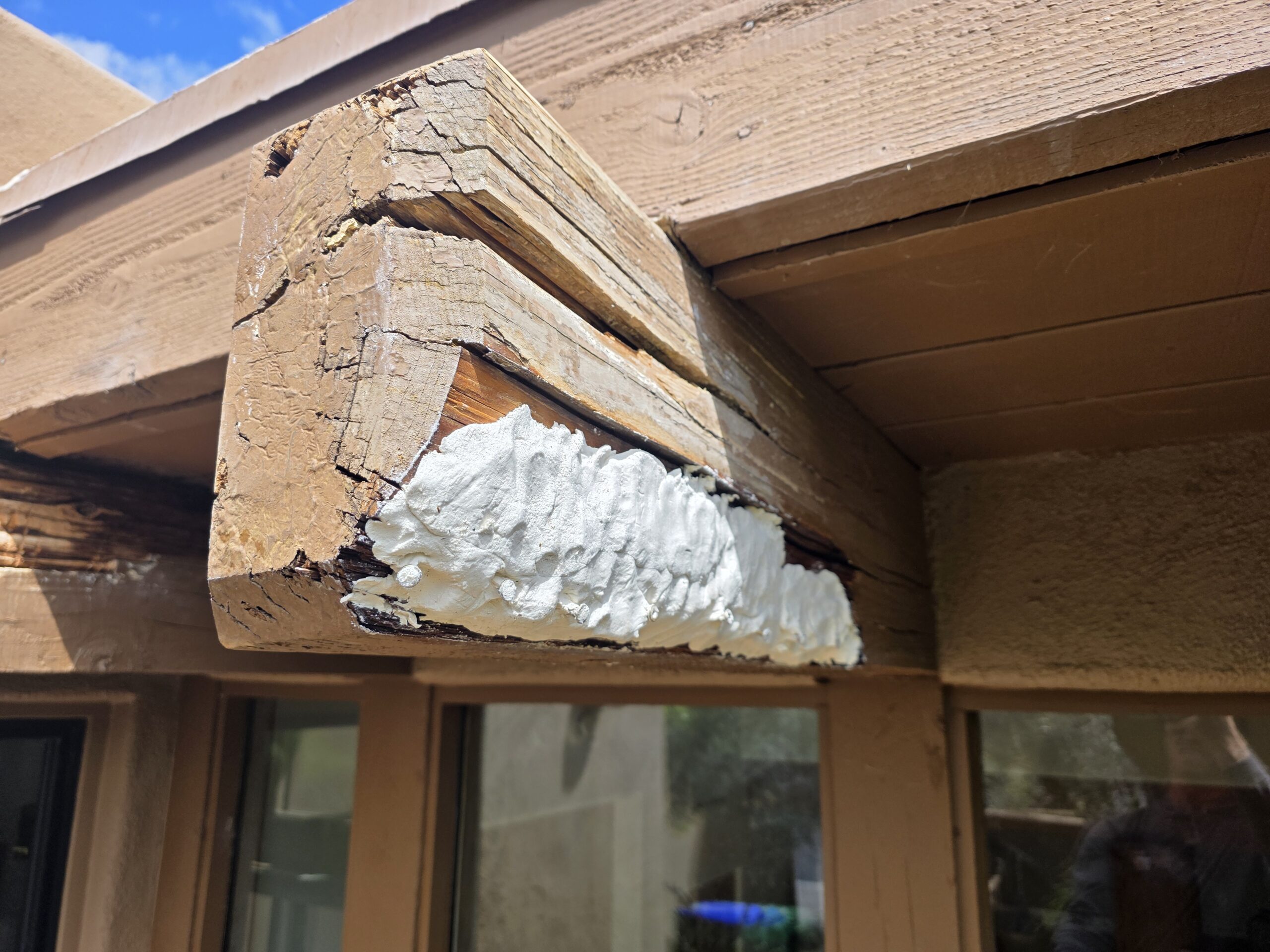
More than a surface patch
What Is Epoxy Beam Restoration?
Epoxy beam restoration is a repair process used to rebuild damaged or missing portions of a wood beam. For exposed beam ends, the process typically involves removing deteriorated material, preparing the remaining wood, rebuilding the missing section with a specialized epoxy restoration material, shaping the repair, sanding the surface, and finishing the beam so it blends with the home’s exterior.
This type of repair is especially useful when the exposed end has deteriorated but the main body of the beam is still sound. Instead of removing the entire beam, the damaged portion may be rebuilt and protected.
Epoxy restoration is not the same as a quick surface patch. A proper repair requires preparation, shaping, finishing, and protection.
Why the exposed end is vulnerable
Why Exposed Beam Ends Fail
Arizona’s climate is hard on exterior wood. Exposed beams often extend beyond roof lines, parapets, patios, or exterior walls. The end grain can absorb moisture more easily than the sides, and once cracks open, water can move deeper into the wood.
- Long-term UV exposure
- Dry heat causing cracks and splits
- Monsoon moisture entering cracks
- Aging paint, stain, or sealant
- Unprotected end grain
- Failed previous patchwork
- Repeated expansion and contraction
- Moisture trapped beneath coatings
When caught early enough, exposed beam rot in Arizona may be addressed before the damage spreads too far into the beam.
When preservation may be practical
When Epoxy Beam Repair Makes Sense
Epoxy beam repair may be a good option when the damage is mostly limited to the exposed beam end and the remaining wood is stable enough to support a lasting repair. This is common with decorative vigas, patio beams, rafter tails, and exterior beam extensions where the ends have taken the most weather exposure.
- The beam end is cracked, split, or weathered
- Small or moderate sections are missing
- The damaged area can be cleaned properly
- The main beam is still solid
- The beam is decorative or partially decorative
- The original look should be preserved
- Replacement would be overly disruptive
- A protective cap can be added after repair
Not every damaged beam should be repaired with epoxy. If deterioration extends deep into the beam or affects structural performance, replacement may be the better option. A professional evaluation helps determine the correct approach.
The restoration sequence
How Professional Epoxy Beam Restoration Works
Inspecting the Beam Damage
The damaged beam end is evaluated to determine how far the deterioration extends and whether the beam is a good candidate for repair. The contractor looks for cracking, splitting, missing material, soft wood, failed coatings, previous patchwork, moisture damage, and signs that the problem extends beyond the exposed end.
- Is the damage limited to the end?
- Is the remaining wood stable?
- Is the beam decorative, structural, or both?
- Has it been repaired before?
- Is moisture still entering?
- Would a protective cap help?
Epoxy should not be used to hide a deeper structural issue. The repair must be based on the true condition of the beam.
Removing Rotted or Failed Wood
Before epoxy can be used, loose, rotted, crumbly, cracked, or unstable material must be removed so the repair can bond to sound wood. Covering over failed wood can trap moisture and allow deterioration to continue beneath the surface.
- Cut away loose or failed sections
- Clean out soft or deteriorated wood
- Open damaged areas for preparation
- Remove failed previous patch material
- Create a clean restoration surface
The goal is not to remove more wood than necessary. It is to remove the failed material so the remaining beam end can be rebuilt correctly.
Stabilizing the Remaining Beam End
After damaged material is removed, the remaining wood must be prepared and stabilized. This may involve cleaning the surface, drying the area when needed, and preparing exposed wood so the restoration material can bond correctly.
This step is especially important for Arizona homes because beam ends may have years of sun damage, old coatings, dust, and weather exposure. Proper preparation helps the repair perform better and look cleaner once finished.
Rebuilding Missing Sections With Epoxy
Once the remaining wood is prepared, missing portions can be rebuilt with epoxy restoration material. The repair may recreate a square beam end, rounded viga end, decorative profile, or another exterior wood detail.
The material may be built up in layers and shaped as it cures so the repaired area follows the original beam profile as closely as possible.
- Missing corners
- Cracked beam ends
- Deteriorated viga ends
- Weathered patio beam ends
- Rafter tails with surface damage
- Decorative exterior beam features
Shaping and Sanding the Beam End
After the epoxy has cured, the repaired beam end is shaped and sanded. This turns a rough rebuild into a finished restoration. Shaping helps match the original profile, while sanding smooths the surface and prepares it for paint, stain, sealant, or another finish.
A clean restoration should avoid looking like a bulky patch. The repaired area should follow the original lines of the beam as closely as possible.
Finishing, Sealing, and Protecting the Repair
The rebuilt beam end is finished with paint, stain, sealant, or another exterior coating appropriate for the home and existing beam appearance. Because Arizona sun and weather are major causes of deterioration, finishing is an essential part of the repair.
In many cases, protective metal caps may also be recommended to shield the repaired end from direct sun and rain.
- Reduce direct UV exposure
- Limit moisture contact
- Protect the most vulnerable area
- Help extend restoration life
- Improve the finished appearance
No exterior wood feature is maintenance-free, but finishing and protective caps can help reduce future exposure damage.
Preserve the usable beam
When Epoxy Repair May Be Appropriate
Epoxy repair focuses on restoring a damaged beam end when the remaining beam is still usable. It may be the better choice when deterioration is limited, the beam is stable, and preserving the original architectural feature is important.
Repair is often less disruptive than removing and replacing an entire beam that is integrated into stucco, a parapet, patio, roofline, or exterior wall.
Replace when integrity is affected
When Full Replacement May Be Necessary
Replacement may be required when a beam has deep rot, widespread deterioration, severe internal decay, or structural damage. In those situations, patching the visible end may only hide a larger problem.
For a deeper comparison, read our guide on repair vs. replacement for rotted exposed beams.
Preparation determines performance
Why Professional Beam Restoration Matters
Epoxy beam restoration should be handled carefully. A repair that only covers the surface may look better temporarily, but it can fail if the damaged material was not removed or the remaining wood was not prepared correctly.
Professional restoration focuses on the complete process: evaluation, removal of failed material, stabilization, rebuilding, shaping, finishing, and protection. This is especially important on Arizona homes where exposed beams are both architectural and potentially functional.
Avoid repairs that only hide damage
Common Mistakes With Beam-End Patch Repairs
Not all beam repairs are equal. Quick patch jobs may temporarily hide deterioration without addressing the actual problem, causing the repair to crack, look uneven, separate from the wood, or trap ongoing damage.
- Applying filler over rotted material
- Failing to remove unstable wood
- Ignoring moisture entry points
- Not matching the beam profile
- Leaving the end unprotected
- Using epoxy on structural damage
A proper restoration should improve both appearance and durability. It should also help the homeowner understand what caused the damage and how future exposure can be reduced.
Common homeowner questions
Frequently Asked Questions About Epoxy Beam Restoration
Can epoxy repair a rotted beam end?
Yes, epoxy can often be used when the damage is limited and the remaining wood is stable. If rot extends deep into the beam or affects structural integrity, replacement may be necessary.
Is epoxy beam restoration the same as wood filler?
No. Professional epoxy restoration includes removing damaged material, preparing the remaining wood, rebuilding missing sections, shaping the repair, sanding, finishing, and protecting the beam end.
How long does epoxy beam repair last?
The lifespan depends on the beam’s condition, quality of preparation, exposure to sun and moisture, and whether the repaired area is properly finished and protected. Protective caps may help extend the life of the repair.
Can epoxy restoration be used on vigas?
Yes, epoxy restoration may be used on damaged viga ends when deterioration is limited and the remaining wood is stable. The repair can be shaped to help preserve the original Southwestern architectural look.
When should a beam be replaced instead of repaired?
Replacement may be necessary when rot extends deep into the wood, the beam is structurally compromised, or the damage is too widespread for restoration to be reliable.
Do protective beam caps help after epoxy repair?
Yes. Protective metal caps can help shield repaired beam ends from direct sun and moisture, reducing future weather exposure and helping preserve the restoration.
Beam-end restoration in Phoenix, Arizona
Schedule an Epoxy Beam Restoration Consultation
If your exposed beam ends are cracked, rotted, split, weathered, or missing sections, Sticks’n Steel Construction can help. Our team provides beam-end repair, exposed-beam restoration, viga repair, epoxy rebuilding, dry-rot repair, and protective beam-cap solutions throughout the Phoenix area.